

Introduction
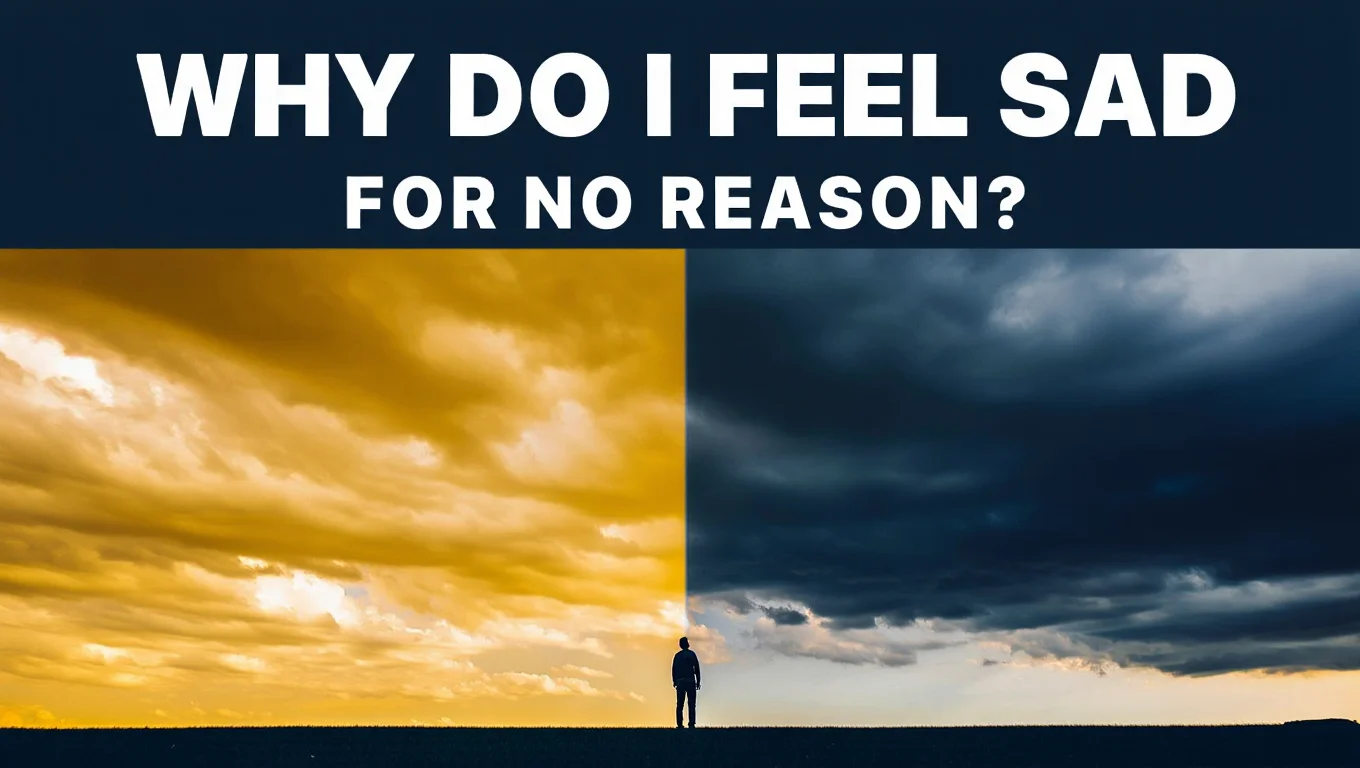
You wake up in the morning. Nothing bad has happened. Your life looks fine from the outside. But somewhere deep inside, there is a heavy feeling you just cannot shake. You feel low, empty, or close to tears, and you have no idea why.
If this sounds familiar, you are not alone.
Feeling sad for no reason is more common than most people think. Millions of people experience this quiet, unexplained heaviness every single day. It can be confusing and even a little frightening when your emotions do not match your circumstances.
The good news is that this feeling almost always has a cause. It may just be hidden beneath the surface.
In this article, we will explore the real reasons behind unexplained sadness, help you understand what your emotions are trying to tell you, and share practical ways to start feeling better.
What Does It Mean to Feel Sad for No Reason?
When we talk about feeling sad for no reason, we do not mean sadness that appears out of thin air. We mean sadness whose cause is not immediately obvious to you.
The feeling sad for no reason meaning is simply this: your mind or body is responding to something, but you have not yet connected the dots.
It could be buried stress, a hormonal shift, poor sleep, or even a slow buildup of small pressures over time. Your brain registers these signals long before your conscious mind catches up.
This kind of sadness is not weakness. It is your inner world asking for attention.
Common Signs of Unexplained Sadness
Before understanding the causes, it helps to recognize what unexplained sadness actually feels like. You might notice:
- A persistent low mood that lasts for hours or days
- Feeling empty and sad for no reason, even when things seem okay
- Wanting to cry but not knowing why
- Loss of motivation or interest in things you usually enjoy
- Feeling disconnected from people around you
- Low energy or a heavy, tired feeling in your body
- Random sadness and mood swings that come and go without warning
- A general sense that something is just “off”
These signs do not always point to a serious condition. But they do deserve your attention.
Why Do I Feel Sad for No Reason? The Main Causes
This is the big question. Why do I feel sad when nothing is clearly wrong? Here are the most common hidden causes of sadness and depression that people overlook.
Emotional and Psychological Causes
Your mind carries more than you realize. Even when life looks stable, your emotional world can be quietly overwhelmed.
Unprocessed emotions are one of the biggest mental health reasons for feeling sad. When we push down grief, disappointment, or frustration without fully dealing with them, they do not disappear. They sit beneath the surface and leak out as general sadness or emptiness.
Loneliness is another powerful trigger. You can feel lonely even in a room full of people. A lack of deep, meaningful connection, even if your social calendar is full, can create a hollow, sad feeling that is hard to name.
Low self-esteem and negative self-talk also play a role. If your inner voice is constantly critical, your emotional state will reflect that over time.
Hormonal Changes
Your hormones have a massive influence on how you feel emotionally. This is one of the most overlooked causes of sudden sadness in adults.
Hormonal shifts during the menstrual cycle, pregnancy, postpartum recovery, perimenopause, or even thyroid imbalances can all trigger unexplained sadness. These changes affect brain chemicals like serotonin and dopamine, which directly regulate your mood.
If you find yourself asking “why am I suddenly feeling sad” at certain times of the month or during specific life stages, hormones could be a key factor worth discussing with a doctor.
Lifestyle Factors
Sometimes the answer is not in your mind but in your daily habits.
- Poor sleep disrupts emotional regulation. Even one or two nights of bad sleep can make you feel low, irritable, and emotionally fragile.
- A poor diet lacking in nutrients like omega-3 fatty acids, B vitamins, and magnesium has been linked to low mood and depression.
- Lack of physical movement reduces the release of mood-boosting chemicals in the brain.
- Too much screen time or social media can quietly drain your emotional energy and leave you feeling empty.
- Alcohol or caffeine overuse can both disrupt sleep and affect your mood in ways that feel random but are actually predictable.
Hidden Stress and Trauma
Stress does not always feel like stress. Sometimes it feels like sadness.
Chronic low-level stress, the kind that comes from a demanding job, financial worries, a difficult relationship, or caregiving responsibilities, can wear down your emotional resilience slowly. Over time, this can show up as a general feeling of why do I feel low for no reason, even when nothing dramatic has occurred.
Past trauma also plays a role. Unresolved experiences from childhood or earlier in life can surface as unexplained sadness, especially when something in your present environment subtly reminds your nervous system of an old wound.
Is It Normal to Feel Sad Without a Reason?
Yes. Absolutely.
Feeling sad without an obvious trigger is a normal human experience. Emotions are complex, layered, and not always logical. The idea that you should only feel sad when something bad happens is simply not how the human mind works.
That said, there is a difference between occasional unexplained sadness and a persistent low mood that affects your daily life. If you often feel depressed without reason, experience emptiness most of the day, or find that the sadness is lasting weeks rather than days, that is worth paying closer attention to.
At Psych Lounge, we believe that no emotion should be dismissed, no matter how hard it is to explain.
How to Deal with Unexplained Sadness
The good news is that unexplained sadness is not something you are stuck with. Here are real, practical ways to start shifting it.
Practical Coping Strategies
- Name the feeling. Simply acknowledging “I feel sad right now” without judgment can reduce its intensity.
- Journal your thoughts. Writing down what you are feeling, even if it makes no sense, helps bring subconscious emotions to the surface.
- Talk to someone you trust. Speaking with a therapist or someone you trust can provide both relief and a fresh perspective on what you are going through.
- Limit news and social media. Constant negative input fuels low moods even when we do not realize it.
- Breathe slowly. Deep, slow breathing activates the calming part of your nervous system and helps break the cycle of emotional spiraling.
Daily Habits That Help
How to stop feeling sad for no reason often comes down to consistent daily choices:
- Get 7 to 9 hours of sleep each night
- Eat regular, balanced meals with plenty of whole foods
- Move your body for at least 20 to 30 minutes daily, even a walk counts
- Spend time outdoors and in natural light
- Reduce alcohol and caffeine intake
- Make time for things that bring you small moments of joy
These habits build emotional stability over time. They are not quick fixes, but they work.
When to Seek Professional Help
Sometimes how to deal with unexplained sadness goes beyond self-help strategies. There are times when professional support is the right and brave choice.
Consider speaking to a therapist or doctor if:
- Your sadness lasts more than two weeks without improvement
- You feel why do I feel depressed without reason most of the time
- The sadness is interfering with your work, relationships, or daily functioning
- You are experiencing thoughts of hopelessness or self-harm
- You feel disconnected from reality or unable to experience any positive emotions
These are not signs of failure. They are signs that your mind needs extra care, and a professional mental health assessment can be the first and most important step toward feeling better.
A professional can help identify whether conditions like clinical depression require structured treatment such as CBT for depression, anxiety disorders, hormonal imbalances, or other underlying health issues are contributing to how you feel.
How to Improve Your Mental Health Daily
Mental health is not a destination. It is something you tend to every day, in small and simple ways.
Here are habits that support long-term emotional wellbeing:
- Practice gratitude. Writing down three things you are grateful for each day gradually trains your brain toward positive awareness.
- Set gentle boundaries. Saying no to things that drain you protects your emotional energy.
- Stay connected. Make regular time for people who genuinely make you feel good.
- Limit perfectionism. Give yourself permission to be human, imperfect, and still worthy.
- Celebrate small wins. Finishing a task, taking a shower, cooking a meal these all count on hard days.
At Psych Lounge, we remind our readers regularly: mental health care is not selfish. It is necessary.
Conclusion
Feeling sad for no reason can be confusing, lonely, and exhausting. But it is rarely without cause. Somewhere in your emotional landscape, your biology, your habits, or your history, there is a reason. And that reason can be understood, addressed, and healed.
You do not have to figure it all out at once. Start small. Be kind to yourself. Reach out when you need support.
Your emotions are not your enemy. They are messengers. The work is learning to listen to them with patience and compassion.
You are not broken. You are human. And that is more than enough.


Comments
Flynn
The article is good and clearly written. The site is useful
and well maintained.