
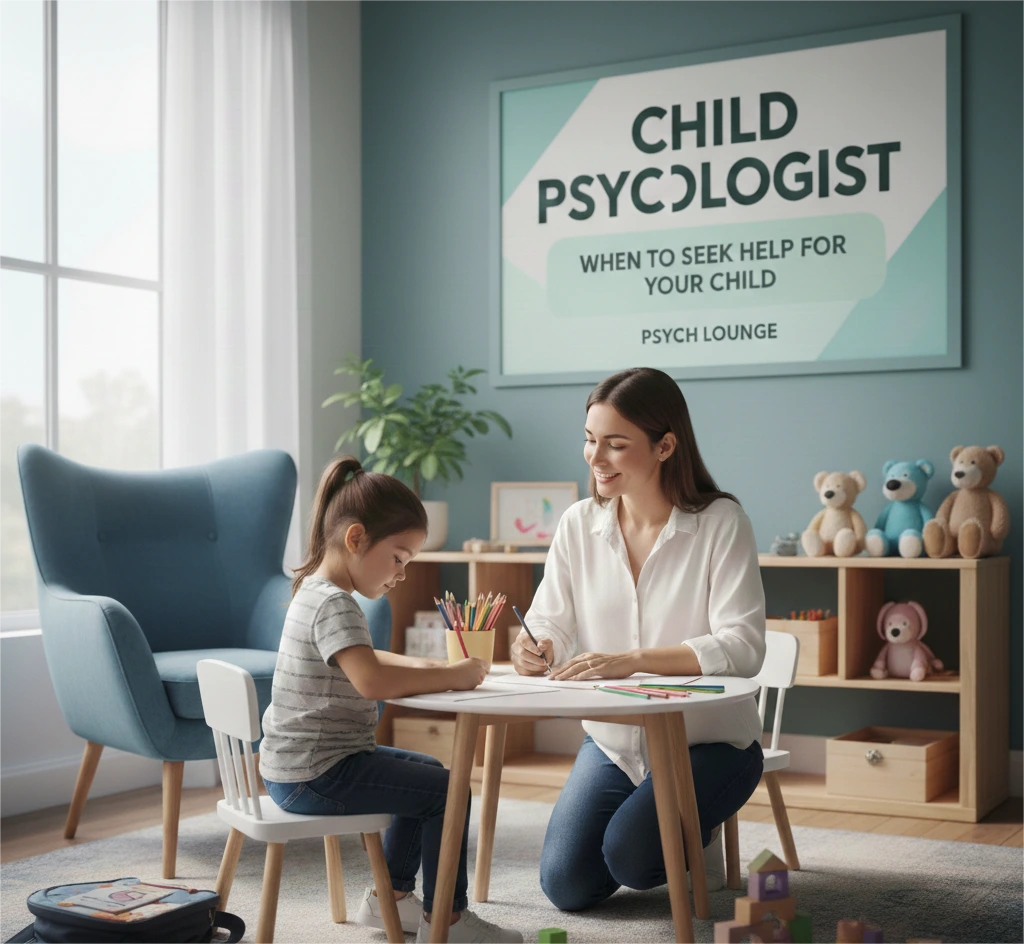
Child Psychologist: Understanding When Your Child Needs Professional Support
Parenting comes with questions no one prepares you for. Is this behaviour just a phase? Why has my child changed so suddenly? Should I be worried, or will this pass with time?
This is where a child psychologist plays a vital role. Not as someone who labels children, but as a trained professional who understands how children think, feel, and communicate at different stages of development.
At Psych Lounge, child psychology is approached with clarity, empathy, and respect for both the child and the family. The goal is simple: help children feel understood and supported, while guiding parents with practical, evidence-based insight.
Let’s break this down properly.
What Is a Child Psychologist?
A child psychologist is a mental health professional trained to understand emotional, behavioural, cognitive, and social development in children and adolescents.
Children don’t process emotions the same way adults do. They often express distress through behaviour rather than words. A child psychologist is trained to read those signals and respond in a way that fits the child’s age, personality, and environment.
At Psych Lounge, child psychologists work with children across a wide age range, including early childhood, school-age children, and teenagers. Each stage brings its own challenges, and each requires a different therapeutic approach.
What Does a Child Psychologist Help With?
Many parents wait too long because they expect problems to look “serious.” In reality, early support often prevents long-term difficulties.
A child psychologist may help with:
- Anxiety and excessive fears
- Emotional outbursts or difficulty managing anger
- Low self-esteem or social withdrawal
- Academic stress and attention difficulties
- Behavioural challenges at home or school
- Adjustment to life changes such as relocation, divorce, or loss
- Developmental and emotional delays
- Sleep difficulties related to emotional stress
At Psych Lounge, therapy focuses on understanding the cause, not just managing symptoms. That distinction matters.
Signs Your Child May Benefit From Seeing a Child Psychologist
Here’s the thing. Children don’t need to be “in crisis” to benefit from psychological support.
Some common signs parents notice include:
- Sudden changes in mood or behaviour
- Ongoing sadness, irritability, or withdrawal
- Regression, such as bedwetting or clinginess
- Difficulty forming or maintaining friendships
- Decline in school performance without a clear reason
- Physical complaints like headaches or stomach aches with no medical cause
These signals don’t mean something is “wrong” with your child. They mean your child may need help expressing or processing what they’re experiencing.
Psych Lounge approaches these concerns calmly and without judgement, helping parents understand what their child’s behaviour is communicating.
How Child Psychology Sessions Usually Work
Parents often worry that therapy will feel intimidating for their child. In practice, it’s quite the opposite.
A child psychologist creates a space where children feel safe enough to be themselves. Depending on age, this may involve:
- Play-based techniques
- Art or creative expression
- Structured conversations
- Emotional skill-building activities
At Psych Lounge, sessions are adapted to the child’s developmental level. Younger children may communicate through play, while older children and adolescents often benefit from guided discussion and practical coping tools.
Parents are not excluded from the process. Guidance, feedback, and parental involvement are key parts of effective child psychology.
The Importance of Early Psychological Support
Many adults seeking therapy later in life trace their struggles back to childhood experiences that were never addressed.
Early support helps children:
- Develop healthy emotional regulation
- Build resilience and coping skills
- Improve communication and confidence
- Strengthen relationships at home and school
What this really means is fewer problems carried forward into adolescence and adulthood.
Psych Lounge places strong emphasis on early intervention, helping children build emotional skills while their brains are still developing.
Child Psychologist vs Counsellor: What’s the Difference?
This question comes up a lot.
A child psychologist has specialised training in child development, assessment, and evidence-based therapeutic approaches. This allows them to understand not just behaviour, but the underlying emotional and cognitive processes driving it.
At Psych Lounge, child psychologists use structured psychological frameworks alongside compassionate care. This combination ensures that support is both warm and clinically sound.
How Psych Lounge Approaches Child Psychology
Psych Lounge is built around one core belief: children do best when they feel understood, not judged.
Their child psychology services focus on:
- Individualised assessment
- Age-appropriate therapeutic techniques
- Collaboration with parents and caregivers
- Respect for each child’s emotional pace
- Practical guidance that parents can use at home
Rather than offering generic solutions, Psych Lounge looks at the child’s world as a whole. Family dynamics, school environment, emotional history, and personality all matter.
This approach builds trust, which is essential for meaningful progress.
Supporting Parents Alongside Children
Child psychology isn’t just about the child sitting in a room with a therapist. Parents play a crucial role.
At Psych Lounge, parents receive:
- Clear explanations without clinical jargon
- Practical strategies tailored to their child
- Ongoing feedback and progress discussions
- Support without blame or criticism
This balanced approach helps parents feel confident rather than overwhelmed.
When Is the Right Time to Contact a Child Psychologist?
The short answer: when you’re unsure.
You don’t need a diagnosis or a referral to start a conversation. Many parents reach out to the Psych Lounge simply because something feels off and they want clarity.
Trusting that instinct often leads to better outcomes for both the child and the family.
Final Thoughts: Choosing the Right Child Psychologist Matters
Children deserve support that respects their individuality and emotional world. A skilled child psychologist doesn’t try to “fix” a child. They help children understand themselves and develop healthier ways to cope.
Psych Lounge provides child psychology services grounded in professional expertise, empathy, and practical guidance. For families seeking clarity, reassurance, and meaningful support, that balance makes all the difference.
FAQ’s
What age should a child see a child psychologist?
Children can benefit from psychological support at almost any age. Early childhood, school years, and adolescence are all important stages where guidance can make a positive difference.
Does seeing a child psychologist mean something is seriously wrong?
No. Many children see a psychologist for emotional support, behavioural guidance, or life transitions. It’s about support, not labels.
How long does child therapy usually take?
This depends on the child’s needs and goals. Some concerns are addressed in a few sessions, while others benefit from longer-term support.
Are parents involved in the therapy process?
Yes. At Psych Lounge, parents are actively involved through guidance, feedback, and collaborative planning.
How do I know if Psych Lounge is right for my child?
Psych Lounge offers an approach focused on understanding, evidence-based care, and parent collaboration. If you’re looking for thoughtful, professional child psychology support, it’s a strong place to start.