
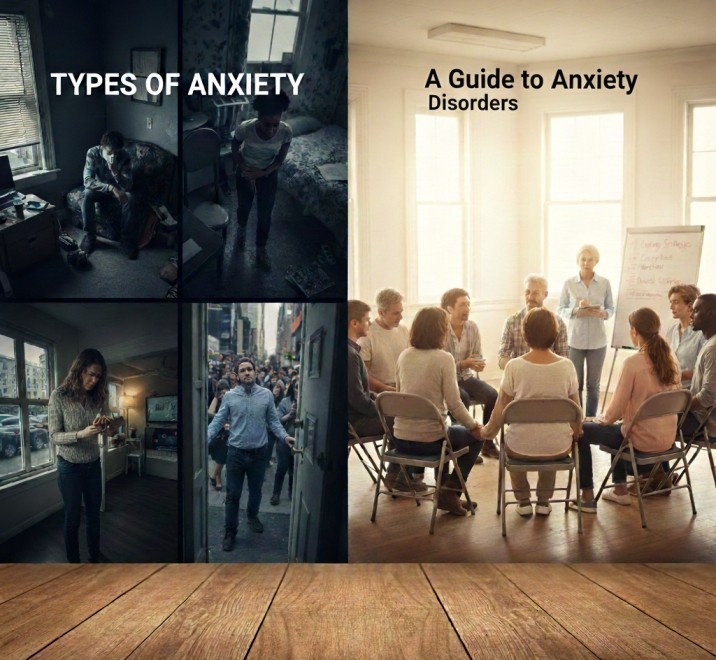
Types of Anxiety: Understanding the Different Forms and How They Affect You
Anxiety is one of those words that gets used casually, yet lived very intensely. People say they feel anxious before a presentation or during a tough life change. But for millions, anxiety is not a passing feeling. It’s persistent, disruptive, and often confusing. Knowing the different types of anxiety matters because each one shows up differently, affects the body and mind in specific ways, and benefits from targeted support.
Here’s the thing. Anxiety isn’t a single condition. It’s a family of related experiences that sit on a spectrum, from everyday worry to diagnosable anxiety disorders. Understanding where you or someone you care about fits on that spectrum can be the first step toward relief. At Psych Lounge, this distinction is central. Clarity reduces fear. Language creates understanding. And understanding opens the door to support.
What Anxiety Really Is (and What It Isn’t)?
Anxiety is the body’s built-in alarm system. It’s designed to keep us safe by preparing us for perceived danger. Increased heart rate, rapid breathing, alertness all normal responses when something feels threatening. The problem starts when that alarm goes off too often, too loudly, or without a clear reason. Anxiety disorders are not a sign of weakness, poor coping, or personality flaws. They’re recognised mental health conditions shaped by a mix of biology, psychology, life experience, and environment. Not all anxiety looks the same. Let’s break down the main types.
Generalised Anxiety Disorder (GAD)
Generalised Anxiety Disorder is characterised by persistent, excessive worry about everyday situations. This worry isn’t limited to one area. It can shift constantly health one day, finances the next, relationships after that. The common thread is that the mind struggles to switch off.
Common features of GAD
● Constant overthinking and “what if” scenarios
● Feeling tense, restless, or on edge most days
● Difficulty concentrating or sleeping
● Physical symptoms like muscle tension, headaches, or stomach issues
People with GAD often say they feel anxious about being anxious. The worry feels uncontrollable, even when life is objectively stable.
Panic Disorder
Panic disorder centres around panic attacks sudden surges of intense fear that peak quickly and feel overwhelming. These attacks are not dangerous, but they can feel terrifying.
Panic attacks may include
● Racing heart or chest pain
● Shortness of breath or choking sensations
● Dizziness, sweating, trembling
● A fear of losing control or dying
What maintains panic disorder is often the fear of the next attack. This can lead to avoidance of places or situations where an attack has happened before. Many people presenting to Psych Lounge with panic disorder initially believe they have a serious physical illness. That uncertainty adds another layer of distress.
Social Anxiety Disorder
Social anxiety goes beyond shyness. It’s an intense fear of being judged, embarrassed, or negatively evaluated by others. The focus isn’t on social interaction itself, but on how one is perceived within it.
Signs of social anxiety
● Fear of speaking, eating, or performing in front of others
● Avoiding social events, meetings, or calls
● Strong self-criticism after interactions
● Physical symptoms like blushing, shaking, or nausea
This form of anxiety often begins in adolescence and can quietly shape career choices, friendships, and self-esteem if left unaddressed.
Specific Phobias
A phobia is a strong, irrational fear of a specific object or situation that poses little real danger. Common examples include:
● Flying
● Heights
● Spiders or insects
● Needles or medical procedures
The anxiety response is immediate and intense. Avoidance becomes the main coping strategy, which can shrink daily life over time. While phobias are highly focused, they’re also highly treatable with the right psychological support.
Obsessive-Compulsive Disorder (OCD)
OCD is often misunderstood and oversimplified. It’s not about liking things tidy or organised. OCD involves obsessions (intrusive, unwanted thoughts or images) and compulsions (repetitive behaviours or mental acts done to reduce distress).
Examples include
● Fear of contamination leading to excessive washing
● Intrusive thoughts about harm followed by checking rituals
● A need for symmetry or exactness
The relief from compulsions is temporary, which keeps the cycle going. OCD is an anxiety-related condition that requires specialised, evidence-based treatment.
Post-Traumatic Stress Disorder (PTSD)
PTSD develops after experiencing or witnessing a traumatic event.The nervous system remains stuck in survival mode, even when the danger has passed.
Common PTSD symptoms
● Flashbacks or intrusive memories
● Nightmares
● Hypervigilance and exaggerated startle response
● Avoidance of reminders of the trauma
Anxiety in PTSD is closely linked to past threat. At Psych Lounge, trauma-informed care focuses on safety, stabilisation, and gradual processing rather than forcing exposure too quickly.
Separation Anxiety (Not Just for Children)
While often associated with childhood, separation anxiety can affect adolescents and adults too. It involves intense distress when separated from a specific person or anticipating that separation. This can show up in relationships as:
● Fear of abandonment
● Difficulty is being alone
● Constant reassurance is seeking
In adults, it’s sometimes mislabelled as dependency or insecurity, when it’s actually an anxiety-based attachment response.
Health Anxiety
Health anxiety involves excessive worry about having or developing serious illness, despite medical reassurance.Body sensations are closely monitored and often misinterpreted as signs of disease. People with health anxiety are not imagining symptoms. The sensations are real. The interpretation is what fuels the anxiety loop. This type of anxiety thrives on uncertainty, which makes reassurance alone ineffective over time.
When Anxiety Types Overlap
Here’s an important point. Many people experience more than one type of anxiety. For example:
● GAD with panic attacks
● Social anxiety alongside depression
This overlap is normal and doesn’t mean symptoms are “worse”. It simply means the nervous system has learned multiple threat patterns. A thorough psychological assessment helps identify what’s driving the anxiety, rather than forcing symptoms into a single label.
Why Understanding the Type of Anxiety Matters
Understanding the type of anxiety isn’t about putting yourself in a box. It’s about precision. Different anxiety disorders respond best to different therapeutic approaches. What helps panic may not help OCD. What works for phobias may not suit trauma. At Psych Lounge, education is part of the therapeutic process. When people understand why their anxiety behaves the way it does, shame decreases and motivation increases.When to Seek Support If anxiety is:
● Persistent rather than situational
● Interfering with work, relationships, or sleep
● Leading to avoidance or emotional exhaustion
Then support can make a meaningful difference. You don’t need to be in crisis to seek help. Early support often prevents anxiety from becoming more entrenched.
A Grounded Perspective from Psych Lounge
Anxiety is not a personal failure. It’s a nervous system doing its job too well for too long. At Psych Lounge, the focus is on understanding each person’s experience in context. Labels are used to guide care, not define identity. The goal is always long-term regulation, not quick fixes. When anxiety is understood, it becomes workable. And when it becomes workable, people regain choice.
FAQs
What is the most common type of anxiety?
Generalised Anxiety Disorder is among the most common, often because its symptoms are broad and persistent.
Can you have anxiety without panic attacks?
Yes. Many anxiety disorders, including GAD and social anxiety, occur without panic attacks.
Are anxiety disorders lifelong?
Not necessarily. With appropriate psychological support, many people experience significant improvement or full remission.
How do I know which type of anxiety I have?
A qualified mental health professional can assess symptoms, patterns, and triggers to provide clarity.
Is anxiety always caused by trauma?
No. Trauma is one possible factor, but anxiety can develop through genetics, learning, stress, or life transitions.