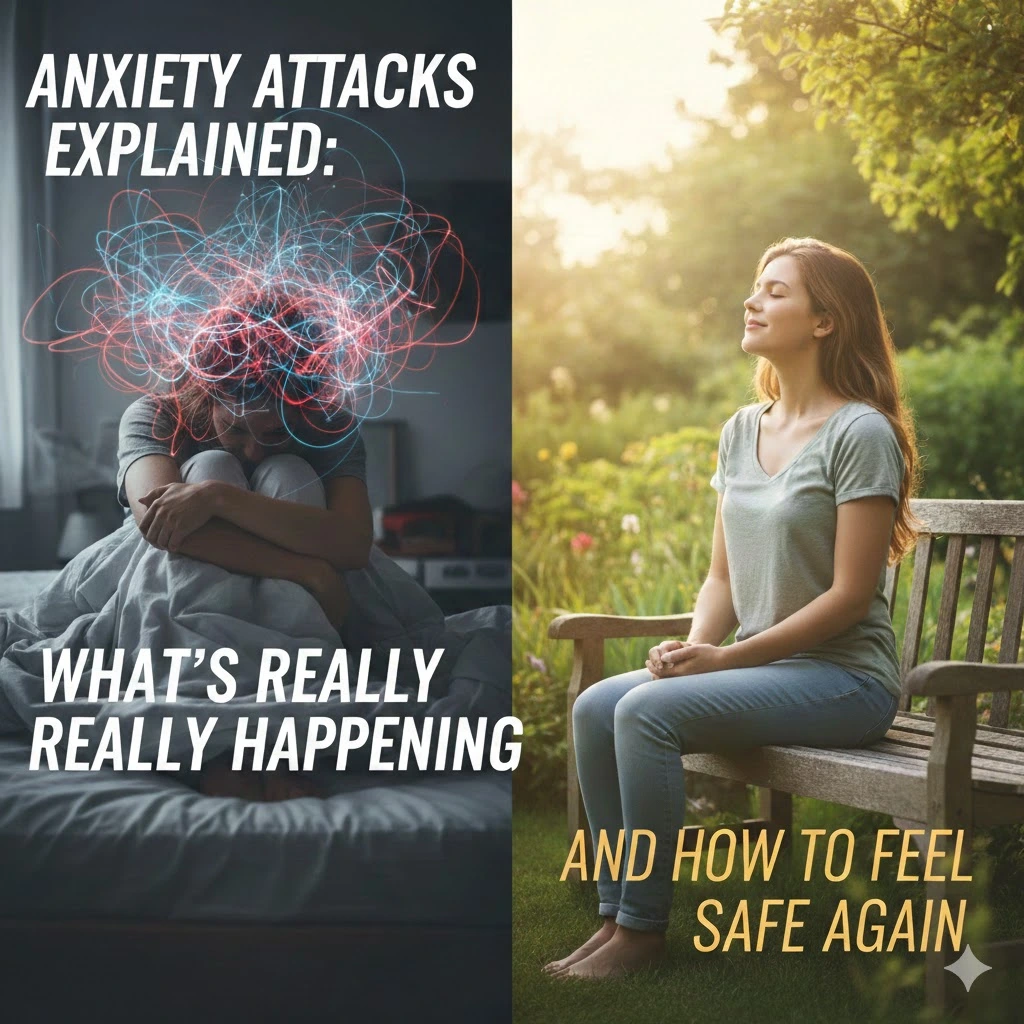
Anxiety Attacks Explained: What’s Really Happening and How to Feel Safe Again
If you’ve ever felt your heart race for no clear reason, struggled to breathe, or suddenly feared something terrible was about to happen, you’re not alone. An anxiety attack can arrive unexpectedly and leave you feeling shaken long after it passes. However, understanding what’s happening inside your body can make a powerful difference. At Psychlounge, we work closely with people who experience anxiety every day. Therefore, this guide breaks things down in a simple, supportive way so you can feel informed, grounded, and more in control.
What an Anxiety Attack Feels Like?
An anxiety attack is your body’s natural stress response turning on too strongly. Even though there’s no immediate danger, your nervous system reacts as if there is. As a result, your body releases adrenaline, preparing you to fight or flee. You may notice symptoms such as:
- A pounding or racing heart
- Tightness in your chest
- Shallow or fast breathing
- Dizziness or nausea
- A strong urge to escape
Although these sensations feel intense, they are not dangerous. Once you understand this, fear often begins to lose its grip.
Anxiety Attack vs Panic Attack: Why the Difference Matters
Many people use the terms interchangeably. However, an anxiety attack usually builds slowly and connects to ongoing stress or worry. Panic attacks, on the other hand, tend to appear suddenly and peak quickly. Knowing the difference helps professionals at Psychlounge identify triggers more accurately. Consequently, treatment becomes more effective and personalized.
Why Anxiety Attacks Happen in the First Place?
An anxiety attack rarely has one single cause. Instead, it develops through a mix of emotional stress, lifestyle habits, and personal history. Common contributors include:
- Long-term stress or emotional overload
- Past trauma or unresolved experiences
- Poor sleep or exhaustion
- Too much caffeine
- A sensitive nervous system
Over time, your brain learns to stay alert. As a result, it reacts strongly even to minor stressors.
Early Signs Your Body Is Asking for a Break
An anxiety attack usually sends warning signs before it fully arrives. Paying attention to these signals can help you step in earlier. You might notice:
- Constant overthinking
- Muscle tension
- Irritability
- Trouble concentrating
- Ongoing fatigue
At Psychlounge, therapists encourage awareness because early action often prevents escalation.
What Helps During an Anxiety Attack?
When an anxiety attack begins, the goal is not to fight it. Instead, you want to calm your nervous system gently. Try these grounding techniques:
- Slow your breathing by breathing out longer than you breathe in
- Focus on your senses by naming what you can see or touch
- Relax your body by dropping your shoulders and unclenching your jaw
Practicing these tools regularly makes them easier to use when stress rises.
Long-Term Ways to Reduce Anxiety Attacks
While quick techniques help in the moment, long-term support reduces how often an anxiety attack happens. Helpful strategies include:
- Cognitive Behavioral Therapy (CBT)
- Gentle, regular exercise
- Mindfulness practices
- Healthy sleep routines
- Emotional support from professionals
Therapists at Psychlounge use proven, research-based approaches. Therefore, clients learn not just how to cope, but how to heal.
When It’s Time to Get Professional Support
If an anxiety attack starts interfering with your work, relationships, or sleep, reaching out for help is a strong step not a weak one. Mental health professionals at Psychlounge listen without judgment. They focus on understanding your experience fully before guiding you forward.
How Therapy Changes the Relationship with Anxiety
Therapy helps you recognize how thoughts, emotions, and physical reactions connect. Over time, fear decreases because understanding increases. Clients often say they feel more confident, calmer, and less afraid of their own body. That transformation sits at the heart of the work done at Psychlounge.
Learning to Trust Yourself Again After repeated episodes, many people worry about the next anxiety attack. Unfortunately, that fear keeps the stress cycle alive. However, education and support rebuild trust. When you understand your body, anxiety loses control. Slowly, calm replaces fear.
Final Thoughts
An anxiety attack can feel overwhelming, but it does not define who you are. With the right guidance, support, and tools, relief is possible. At Psychlounge, we believe healing begins with understanding and continues with compassion. If anxiety feels like it’s taking over, you don’t have to face it alone.
FAQs
1. How long does an anxiety attack usually last?
Most anxiety attacks last between a few minutes and about half an hour. Although the sensations feel intense, they usually pass faster than expected once your body begins to calm down.
2. Can an anxiety attack cause physical harm?
No. Even though the symptoms feel scary, an anxiety attack does not damage your heart or body. It is a stress response, not a medical emergency.
3. Why do anxiety attacks happen without warning?
Sometimes stress builds quietly over time. As a result, your body reacts suddenly when it feels overwhelmed, even if you don’t notice an obvious trigger.
4. Is it normal to fear having another anxiety attack?
Yes, this is very common. However, that fear can increase anxiety. Learning what’s happening in your body helps reduce this cycle over time.
5. Should I see a therapist for anxiety attacks?
If anxiety attacks are frequent or affecting your daily life, therapy can be very helpful. Professionals at Psychlounge guide you through proven tools to manage symptoms and feel safe again.
6. Can anxiety attacks be prevented completely?
While they may not disappear overnight, many people significantly reduce how often they occur. With the right support, coping skills, and self-awareness, anxiety becomes much more manageable.