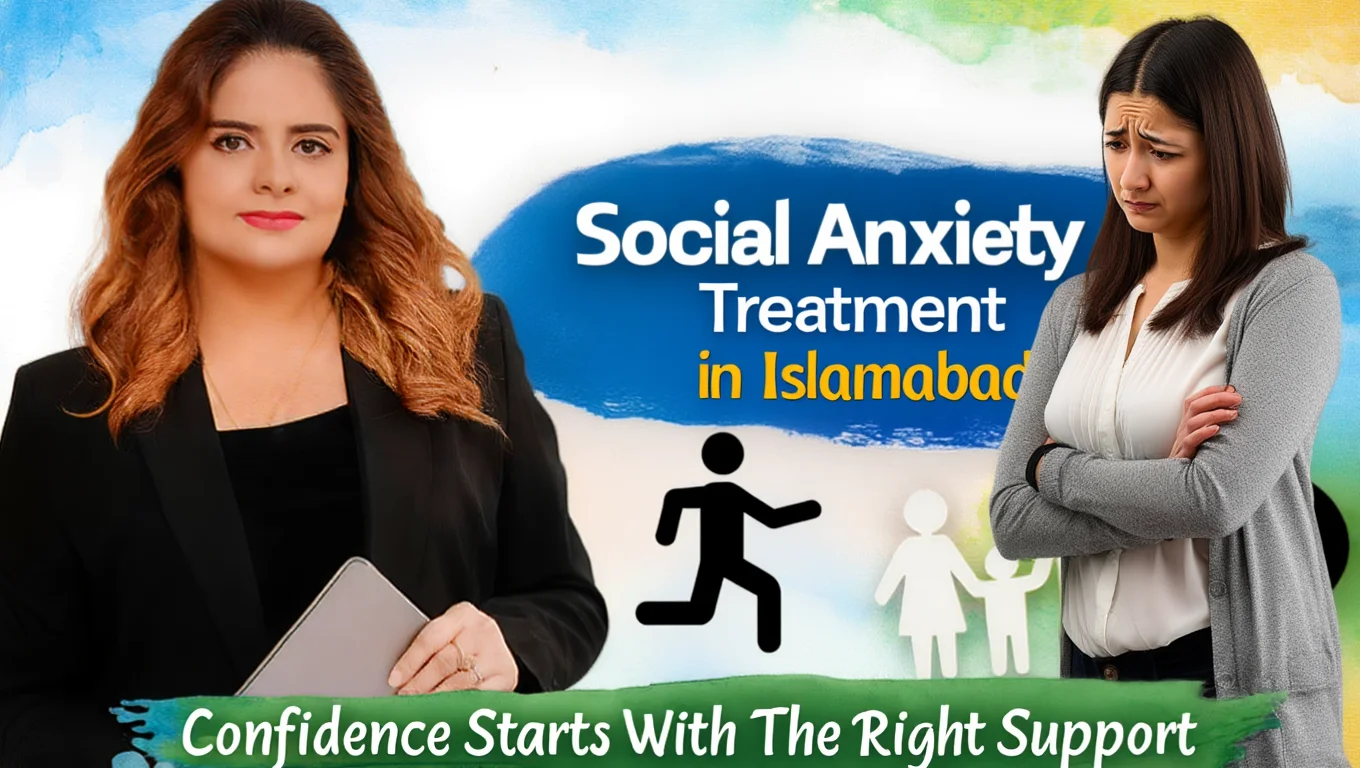
Standing up to speak in a meeting, attending a wedding, making a phone call, or simply eating in front of others, for many people in Islamabad, these ordinary situations trigger intense fear, physical symptoms, and a powerful urge to escape or avoid.
Social anxiety disorder is far more than shyness. It is a clinically recognised condition involving persistent, excessive fear of social situations due to the belief that one will be scrutinised, judged, or humiliated. It affects daily functioning, career progress, relationships, and quality of life.
The good news is that social anxiety treatment in Islamabad through evidence-based Cognitive Behavioural Therapy is highly effective. The National Institute of Mental Health recognises CBT as the most effective psychological treatment for social anxiety disorder.
What Is Social Anxiety Disorder?
Social anxiety disorder involves intense fear of one or more social situations in which the person is exposed to possible scrutiny by others. The fear involves being negatively evaluated, embarrassed, humiliated, or offending others.
Physical symptoms in feared situations may include blushing, trembling, sweating, rapid heartbeat, nausea, or a blank mind. The anticipation of these symptoms often becomes as distressing as the situations themselves.
Social anxiety is distinct from general shyness and is one of the most common types of anxiety affecting adults and young people in Pakistan.
How Social Anxiety Maintains Itself
Social anxiety is maintained by a specific cycle. The person predicts negative evaluation in social situations, uses safety behaviours (avoiding eye contact, preparing scripted answers, staying quiet) to manage anxiety, and then interprets surviving the situation as confirmation that disaster was narrowly avoided rather than that it was never likely. This prevents natural recovery.
Understanding this cycle is the first step in effective treatment.
CBT for Social Anxiety: How It Works
Psychoeducation
Learning how social anxiety develops and is maintained helps individuals understand their experience objectively and reduces self-blame.
Cognitive Restructuring
Identifying and challenging automatic thoughts such as “Everyone will notice I am nervous” or “They will think I am stupid” is central to CBT. Clients learn to evaluate social predictions realistically and develop more balanced perspectives.
Behavioural Experiments
Rather than relying only on discussion, CBT uses structured experiments in which clients test their negative predictions against actual outcomes. This builds experiential evidence that feared catastrophes rarely occur.
Gradually Reducing Avoidance and Safety Behaviours
Avoidance provides short-term relief but reinforces social anxiety long-term. Under professional guidance, clients gradually enter feared situations without safety behaviours. This overlaps with the CBT for anxiety approach used more broadly for anxiety conditions.
Social Skills Training (Where Appropriate)
Some individuals benefit from structured work on specific social skills such as initiating conversations, assertiveness, or managing silences. This is incorporated where relevant.
What Happens in Social Anxiety Therapy Sessions?
Initial Assessment
The therapist evaluates the range of feared situations, severity, avoidance patterns, and impact on daily life, work, and relationships. Goals are set collaboratively.
Structured Weekly Sessions
Each session builds on the previous one. Between-session assignments help consolidate progress through real-world practice.
Progress Monitoring
Measurable improvement in feared situations is tracked. The plan is adjusted as clients progress and new challenges emerge.
Why Social Anxiety Is Especially Relevant in Pakistan
Pakistani social culture places significant emphasis on honour, reputation, and social performance. Family gatherings, academic settings, and workplace environments can amplify the specific fears characteristic of social anxiety. Culturally sensitive therapy acknowledges these pressures while working to reduce their disabling impact.
Common Myths About Social Anxiety
Myth: Social anxiety is just introversion or shyness
Social anxiety causes significant distress and impairment. Introversion is a personality style, not a disorder.
Myth: You have to be confident to overcome it
CBT works by changing patterns, not personality. Confidence grows as a result of treatment, not a prerequisite for it.
Myth: Avoiding social situations is the safest option
Avoidance maintains and often intensifies social anxiety over time. Gradual, supported exposure is the effective path.
Cost and Accessibility in Islamabad (2026 Context)
Social anxiety treatment is available in-person and online in Islamabad. Online therapy can be an excellent starting point for individuals whose anxiety makes attending an in-person clinic difficult.
For session information, contact our team. We are committed to making evidence-based support accessible and affordable.
A Reassuring Note
Social anxiety does not have to define your life. With structured, professional support, most individuals experience meaningful improvement and regain confidence in situations they previously avoided. At Psych Lounge, the Best Therapist in Islamabad provides compassionate, evidence-based social anxiety treatment.
Explore our full range of therapeutic approaches at our therapies page and learn about our team at our About Us page.