Introduction
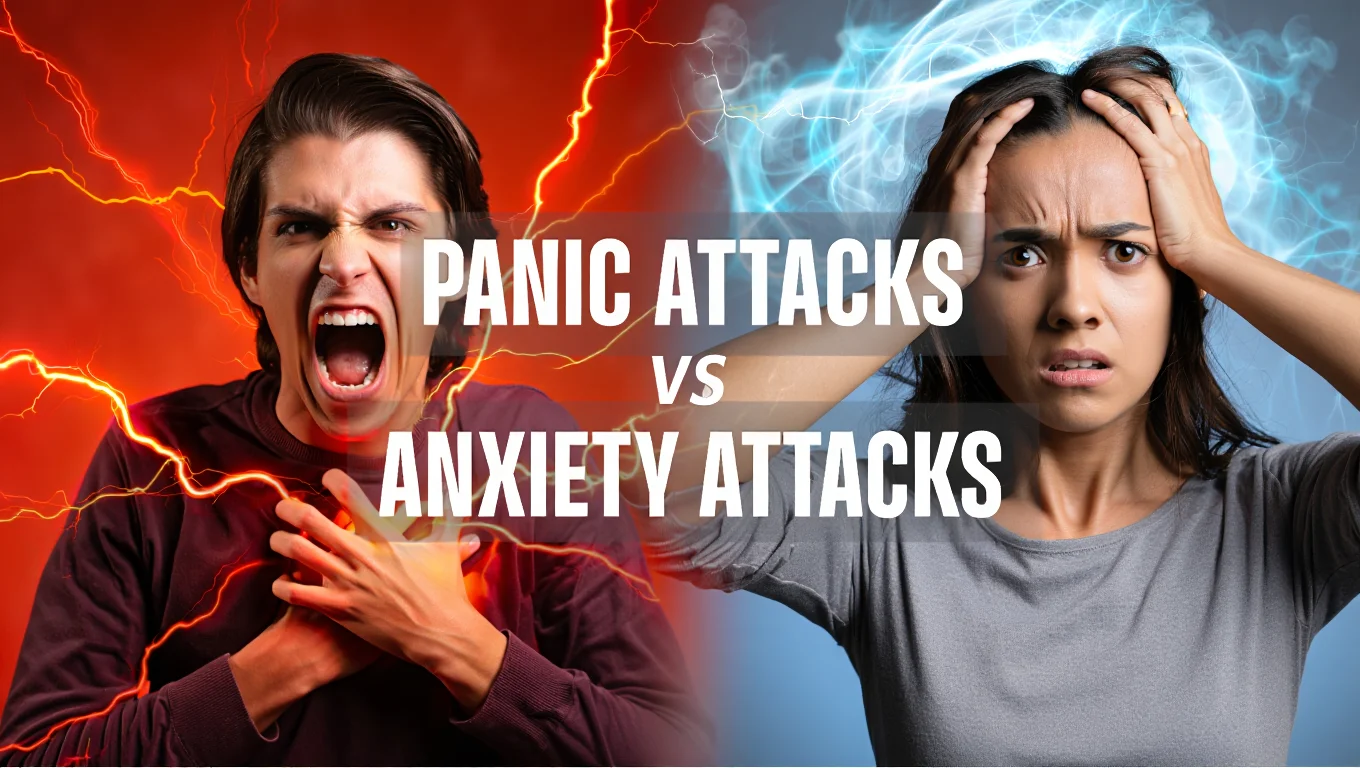
If you have ever felt your heart racing out of nowhere, struggled to breathe, or felt an overwhelming wave of fear, you may have wondered whether you were experiencing a panic attack or an anxiety attack. These two terms are often used interchangeably, but they are actually quite different.
Understanding the difference between panic attacks vs anxiety attacks is important. It helps you recognize what your body and mind are going through, seek the right support, and take meaningful steps toward feeling better. Whether you are personally dealing with these experiences or trying to support someone who is, this guide will walk you through everything you need to know in simple, clear language.
What Is a Panic Attack?
A panic attack is a sudden and intense episode of fear that triggers severe physical and emotional reactions. It comes on quickly, often without any obvious reason or warning. During a panic attack, the body goes into a “fight or flight” response even though there is no real danger present.
Panic attacks are recognized as a clinical term in the Diagnostic and Statistical Manual of Mental Disorders (DSM-5). They can happen to anyone, even people who do not have an anxiety disorder.
A typical panic attack reaches its peak within 10 minutes and usually does not last longer than 20 to 30 minutes. However, those few minutes can feel absolutely terrifying.
Example: Imagine sitting quietly at your desk at work when suddenly your chest tightens, your heart starts pounding, you feel dizzy, and a wave of intense dread washes over you. Nothing triggered it. That is what a panic attack can feel like.
What Is an Anxiety Attack?
Unlike a panic attack, an anxiety attack is not a formal clinical diagnosis. The term is commonly used to describe a period of intense anxiety that builds up gradually in response to a stressful situation or perceived threat.
Anxiety attacks are usually tied to a specific worry or trigger. For example, a person might experience an anxiety attack before a big job interview, during a conflict with a loved one, or when facing a difficult decision. The symptoms tend to build slowly and may linger for a longer period of time compared to panic attacks.
While anxiety attacks are not officially classified in the DSM-5 the way panic attacks are, the experience is very real and can be just as distressing.
Example: You have an important presentation coming up at work. For days leading up to it, you feel tense, your stomach is in knots, your mind keeps racing with worst-case scenarios, and on the day of the event, the anxiety peaks and becomes almost overwhelming. That gradual build-up is often what people call an anxiety attack.
Panic Attacks vs Anxiety Attacks: Key Differences
Here is a simple breakdown of the core differences:
| Feature | Panic Attack | Anxiety Attack |
| Onset | Sudden, without warning | Gradual, builds over time |
| Trigger | Often no clear trigger | Usually tied to a specific stressor |
| Duration | Short (10 to 30 minutes) | Can last hours or days |
| Clinical diagnosis | Yes (DSM-5 recognized) | No formal diagnosis |
| Intensity | Extremely intense, peaks quickly | Varies, often moderate |
| Physical symptoms | Severe and sudden | Milder and more prolonged |
The key takeaway here is that panic attacks tend to strike out of nowhere and are extremely intense, while anxiety attacks are more connected to an identifiable source of stress and develop more slowly.
Panic Attack vs Anxiety Attack Symptoms
While both conditions share some overlapping symptoms, there are important differences in how they present.
Symptoms of a Panic Attack
- Sudden, overwhelming fear or sense of doom
- Racing or pounding heartbeat (palpitations)
- Chest pain or tightness
- Shortness of breath
- Dizziness or lightheadedness
- Sweating or chills
- Nausea or stomach discomfort
- Numbness or tingling sensations
- Feeling detached from reality (depersonalization)
- Fear of losing control or “going crazy”
- Fear of dying
Symptoms of an Anxiety Attack
- Persistent worry or dread
- Restlessness or feeling on edge
- Muscle tension
- Fatigue
- Difficulty concentrating
- Irritability
- Sleep disturbances
- Mild shortness of breath
- Increased heart rate (though less intense than a panic attack)
- Upset stomach or nausea
What Does a Panic Attack Feel Like?
Many people who experience a panic attack for the first time believe they are having a heart attack or a medical emergency. The physical sensations are that intense and real.
The experience often begins with a sudden rush of fear that seems to come from nowhere. Your heart starts hammering against your chest. You cannot seem to catch your breath. Your hands may go numb or start to tingle. You might feel dizzy or like the room is spinning. Some people feel completely detached from their surroundings, as if they are watching themselves from outside their own body.
On top of all these physical sensations, there is an overwhelming emotional component. A crushing sense of dread. A feeling that something terrible is about to happen. Some people feel they are about to die or completely lose control.
It is exhausting, frightening, and deeply unsettling. And unfortunately, people who have had one panic attack are often afraid of having another, which can lead to avoidance behaviors and, over time, panic disorder.
Physical Symptoms of a Panic Attack
The physical symptoms of a panic attack are some of the most intense and alarming aspects of the experience. They include:
- Heart palpitations: The heart races or pounds intensely
- Chest pain: Often mistaken for a cardiac event
- Hyperventilation: Rapid, shallow breathing that makes symptoms worse
- Trembling or shaking: The body physically shakes from the surge of adrenaline
- Sweating: Sudden and often profuse
- Hot flashes or chills: Rapid temperature changes throughout the body
- Nausea: A strong feeling of sickness in the stomach
- Numbness or tingling: Especially in the hands, feet, or face
These symptoms are caused by the body’s stress response flooding the system with adrenaline. Even though there is no real danger, the body reacts as if there is.
Physical Symptoms of an Anxiety Attack
The physical symptoms of an anxiety attack tend to be less severe but can still significantly impact daily life. These include:
- Muscle tension: Persistent tightness in the neck, shoulders, or jaw
- Headaches: Often caused by prolonged tension
- Fatigue: The body becomes worn down from chronic worry
- Stomach problems: Including nausea, cramping, or diarrhea
- Elevated heart rate: Noticeable but not as dramatic as during a panic attack
- Shallow breathing: Breathing becomes faster and less deep
- Sweating: Especially in social or stressful situations
Causes and Triggers
Panic attacks can occur with no identifiable trigger. However, they are more common in people who have panic disorder, PTSD, phobias, or other anxiety-related conditions. Biological factors such as genetics and brain chemistry also play a role.
Anxiety attacks are typically triggered by:
- Work or academic pressure
- Relationship problems
- Financial stress
- Health concerns
- Traumatic events or memories
- Major life changes
Both types of attacks can also be influenced by lifestyle factors like poor sleep, excessive caffeine, lack of exercise, or substance use.
When to Seek Professional Help
If panic or anxiety attacks are interfering with your daily life, it is time to reach out to a mental health professional. You should seek help if:
- Attacks are happening frequently
- You are avoiding situations out of fear of having an attack
- Your quality of life or relationships are suffering
- You are feeling depressed or hopeless alongside anxiety
- You are using alcohol or substances to cope
A therapist, psychologist, or psychiatrist can help diagnose what you are experiencing and create a treatment plan. Individual Therapy sessions at Psych Lounge are tailored to your specific needs and personal history. Cognitive Behavioral Therapy (CBT) is one of the most effective treatments for both panic disorder and anxiety disorders. If you experience recurring panic attacks, explore our dedicated CBT for Panic Disorder program to get structured, professional support.
At Psych Lounge, we believe that no one should have to navigate mental health challenges alone. As a trusted mental health resource, Psych Lounge offers accessible, judgment-free information to help you understand your experiences and take the next step toward healing.
Tips to Manage Panic and Anxiety Attacks
Here are some practical strategies that can help in the moment and over time:
During an attack:
- Practice deep belly breathing (inhale for 4 counts, hold for 4, exhale for 6)
- Use grounding techniques like the 5-4-3-2-1 method (name 5 things you see, 4 you can touch, etc.)
- Remind yourself that the attack will pass and you are not in danger
- Move to a calm, quiet space if possible
Long-term strategies:
- Exercise regularly to reduce baseline anxiety
- Limit caffeine and alcohol
- Practice mindfulness or meditation daily
- Keep a journal to track triggers and patterns
- Build a strong support network
- Consider therapy, especially CBT for Anxiety
Conclusion: Key Takeaways
Understanding panic attacks vs anxiety attacks can make a real difference in how you respond to these experiences. Here is a quick summary:
- Panic attacks come on suddenly, are very intense, and often have no clear trigger
- Anxiety attacks build gradually and are usually linked to a specific stressor
- Both involve physical and emotional symptoms, but they differ in onset, intensity, and duration
- Effective treatments and coping strategies exist for both
- Seeking professional help is a sign of strength, not weakness
You are not alone in what you are feeling. With the right knowledge, support, and tools, it is absolutely possible to regain a sense of calm and control. You can take the first step by booking one of our Therapy Sessions in Islamabad today.