
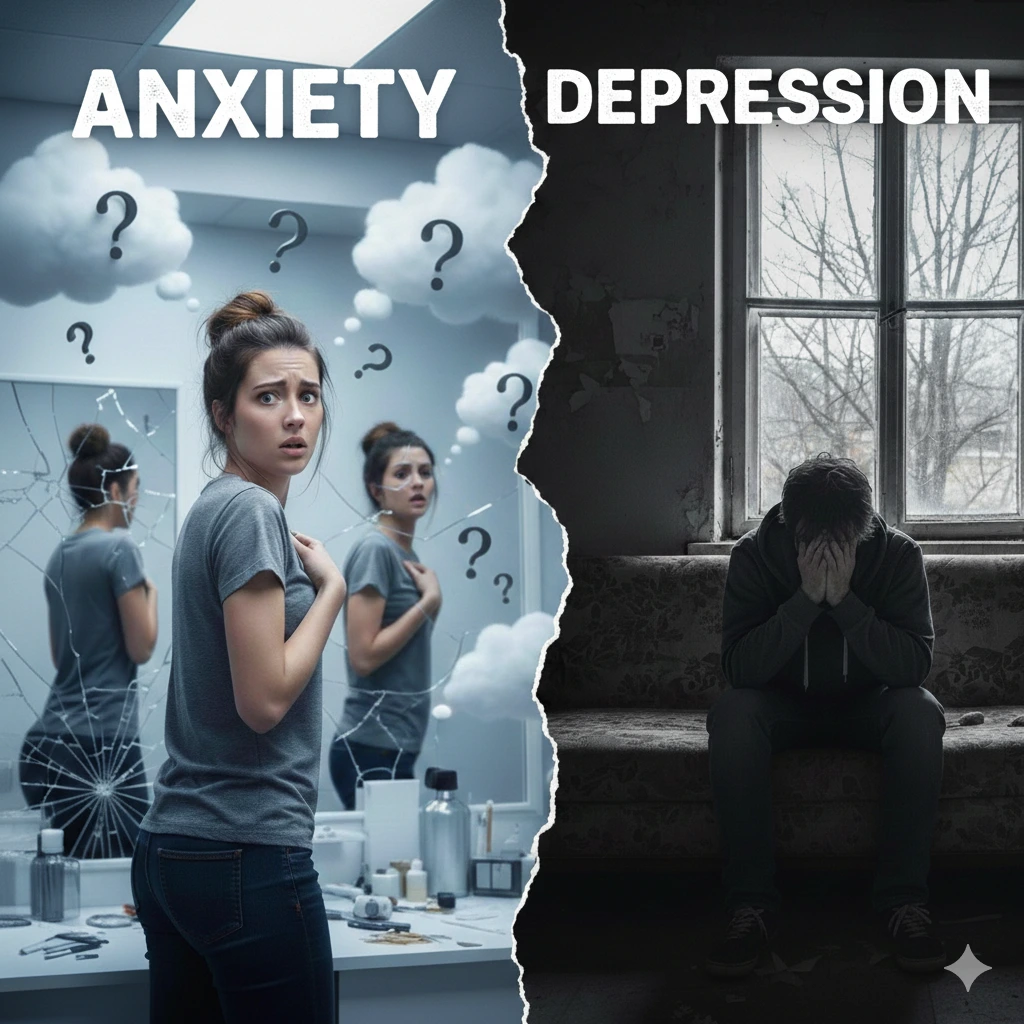
Anxiety vs Depression: Understanding the Difference That Actually Matters
Feeling overwhelmed, low, restless, or emotionally exhausted can be unsettling. Many people ask the same question when these feelings don’t go away: Is this anxiety or depression?
Here’s the thing. Anxiety and depression are often talked about together, but they’re not the same condition. They feel different, affect the mind in different ways, and need different kinds of support. Confusing one for the other can delay understanding what’s really going on.
At Psych Lounge, conversations around mental health are rooted in clarity, compassion, and psychological accuracy. This guide breaks down anxiety vs depression in a way that’s human, practical, and grounded in real experience not labels or assumptions.
Why Anxiety and Depression Are So Often Confused
Anxiety and depression frequently overlap. It’s possible to experience both at the same time, which makes things even harder to untangle. Low energy, sleep problems, difficulty concentrating, and emotional numbness can show up in both conditions.
But beneath the surface, the emotional drivers are different.
- Anxiety is largely future-focused
- Depression is often past-focused or inward-focused
Understanding that distinction is the first step towards recognising what you or someone you care about might be experiencing.
What Is Anxiety?
Anxiety is the body and mind stuck in a state of threat detection. It’s a constant sense that something bad might happen, even when there’s no immediate danger.
Everyone feels anxious sometimes. Anxiety becomes a problem when it’s persistent, excessive, and starts interfering with daily life.
Common Symptoms of Anxiety
- Constant worry or racing thoughts
- Feeling tense, restless, or on edge
- Rapid heartbeat or tight chest
- Difficulty relaxing
- Trouble sleeping due to overthinking
- Avoiding situations out of fear
People with anxiety often say their mind “won’t switch off.” Even calm moments feel uncomfortable, as if something is waiting to go wrong.
What Is Depression?
Depression is not just sadness. It’s a deep emotional heaviness that affects how you think, feel, and function.
Unlike anxiety, depression often drains motivation and emotional energy. Instead of fearing what’s ahead, people with depression may feel disconnected from everything altogether.
Common Symptoms of Depression
- Persistent low mood or emptiness
- Loss of interest in things once enjoyed
- Fatigue or lack of energy
- Feelings of hopelessness or worthlessness
- Changes in appetite or sleep
- Difficulty concentrating
- Withdrawing from others
Depression can make even simple tasks feel overwhelming. Getting through the day can feel like a burden rather than a routine.
Anxiety vs Depression: The Core Differences
Let’s break it down clearly.
Emotional Focus
- Anxiety: “What if something goes wrong?”
- Depression: “Nothing matters anyway.”
Energy Levels
- Anxiety: Heightened energy, restlessness, tension
- Depression: Low energy, heaviness, emotional flatness
Thought Patterns
- Anxiety: Catastrophising, overthinking, worst-case scenarios
- Depression: Self-criticism, hopelessness, negative self-beliefs
Behavioural Response
- Anxiety: Avoidance, reassurance-seeking
- Depression: Withdrawal, disengagement
What this really means is that anxiety pulls you into the future, while depression traps you in emotional shutdown.
Can You Have Anxiety and Depression at the Same Time?
Yes. This is more common than many people realise.
Anxiety can be exhausting. Over time, constant stress and worry can lead to emotional burnout, which can look and feel like depression. On the other hand, depression can create anxiety about functioning, relationships, or the future.
When both coexist, symptoms may include:
- Feeling anxious but emotionally numb
- Worrying constantly yet lacking motivation
- Sleep disturbances combined with low mood
- Feeling overwhelmed and hopeless at the same time
This is why accurate understanding matters. Treating only one side of the experience can leave people feeling stuck.
Causes: Why Anxiety and Depression Develop
There’s no single cause for either condition. They develop through a mix of psychological, biological, and environmental factors.
Common Contributing Factors
- Chronic stress
- Trauma or adverse life experiences
- Ongoing relationship or work pressures
- Genetics and brain chemistry
- Long-term emotional suppression
- Major life changes or losses
At Psych Lounge, the focus is always on understanding the context behind symptoms, not just naming them.
How Anxiety and Depression Affect Daily Life Differently
Anxiety often disrupts how you live. Depression disrupts why you live.
- Anxiety may push someone to overprepare, overthink, or avoid
- Depression may make someone stop trying altogether
Both can affect work, relationships, physical health, and self-esteem, but in distinct ways.
Recognising these patterns helps reduce self-blame. These aren’t personal failures. They’re signals that something internal needs attention.
When to Seek Support
If emotional distress lasts more than a couple of weeks, intensifies, or interferes with daily life, support matters.
Some signs it may be time to reach out include:
- Feeling stuck in the same emotional state
- Struggling to function at work or home
- Isolating yourself from others
- Feeling emotionally numb or constantly overwhelmed
Support doesn’t mean something is “wrong” with you. It means you’re responding to your internal experience with care.
Final Thoughts: Clarity Creates Compassion
Anxiety vs depression isn’t about choosing a label. It’s about understanding your inner world more clearly.
When you know what you’re dealing with, you’re better equipped to respond with patience rather than frustration. That’s the philosophy behind Psych Lounge creating space for informed, grounded conversations around mental health.
Awareness is not the end goal. Understanding is.
FAQs:
Is anxiety worse than depression?
Neither is worse. They’re different. Each affects people in unique ways and requires its own approach to support.
Can anxiety turn into depression?
Prolonged anxiety can contribute to depression over time, especially if emotional exhaustion sets in.
How do I know which one I have?
The focus of your thoughts, energy levels, and emotional patterns can offer clues, but professional guidance provides clarity.
Can lifestyle changes help both anxiety and depression?
Healthy routines, emotional support, and stress management can support both, but deeper issues often need psychological care.
Is it possible to feel anxious without feeling worried?
Yes. Anxiety can show up physically as tension or restlessness even without clear thoughts attached.